


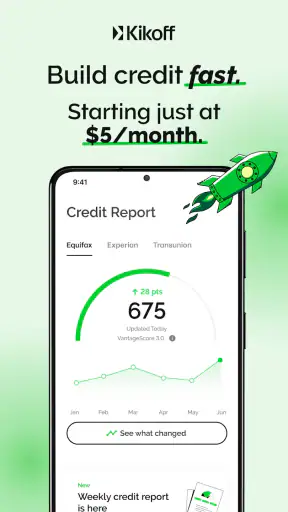
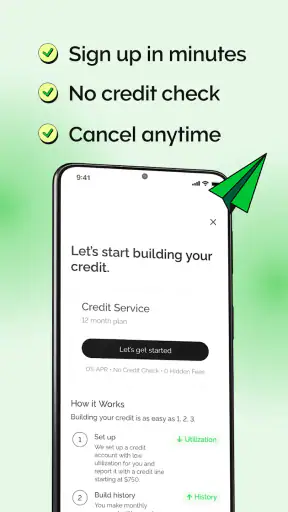
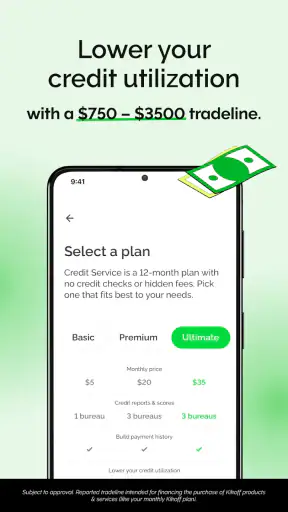
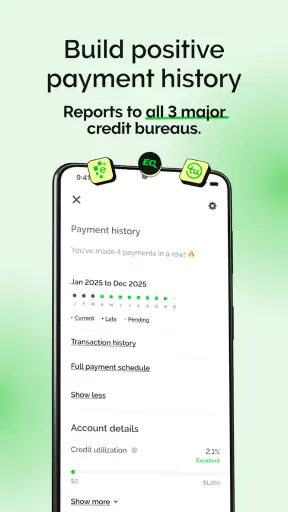
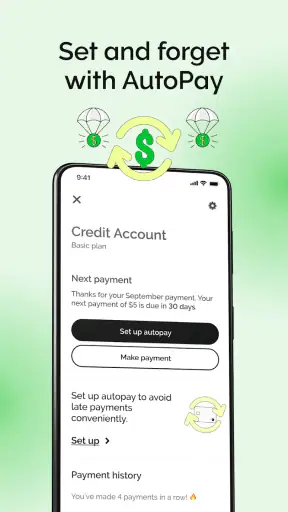
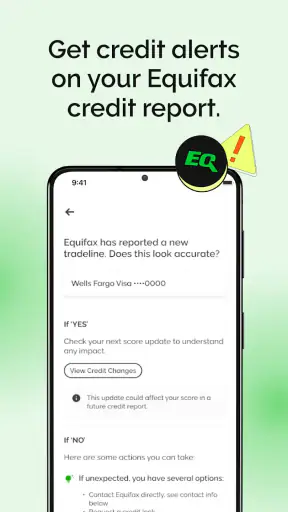
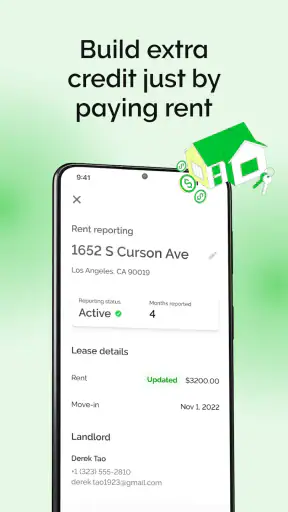
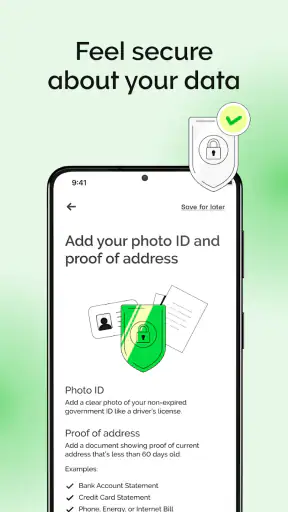
Building credit can feel like a frustrating loop: lenders want to see a credit history before offering useful products, but creating that history usually requires access to credit in the first place. Kikoff - Build Credit Quickly takes a focused approach to that problem. It is a free finance app from Kikoff Inc. designed around the idea that you should be able to begin without a traditional credit check. After spending time with it, I see it as a practical starting point for people who are new to credit or trying to establish a more consistent record, rather than as a complete replacement for every financial tool.
The most important question is not whether the app sounds convenient. It is whether its approach matches your actual goal. If you want a simple entry point and prefer handling the process from a phone, Kikoff is easy to understand. If you need a broad budgeting system, a full banking relationship, or a way to borrow for a large purchase, you may need something else alongside it. My experience is that its value comes from staying narrow and approachable, but that same narrow focus creates limits.
How I Decided Whether Kikoff Was a Good Fit
I judged the app by four practical questions. First, can someone with little or no established credit understand what to do next? Second, does the app make regular use feel manageable rather than intimidating? Third, does it help with a specific credit-building goal instead of pretending to solve every money problem? Finally, is the effort worthwhile compared with using a secured card, a conventional credit product, or a broader personal-finance app?
That last comparison matters. A credit-building product is not automatically better simply because it is easier to start. The right choice depends on whether you need to establish a record, improve payment habits, access spending power, or organize your entire financial life. Kikoff is strongest when the first two goals come before the others.
The app is listed for Everyone and is available at no charge, which removes two common barriers at the beginning. It supports devices running Android 7.0 or later. I also appreciate that the product is presented in plain language: the central promise is that no credit check is needed to begin. That does not make financial decisions risk-free, but it makes the first step less intimidating for somebody who has been rejected elsewhere.
Its public reception is also notable. Kikoff holds a 4.8 average from around 130 thousand ratings, with roughly 17 thousand written reviews, and it has passed 5 million installs. Those figures do not prove that it will suit every user, but they suggest that the basic concept has reached a substantial audience. The app was released on March 25, 2021, and the current version is 1.181.3223, so it is not a brand-new experiment.
The onboarding question is more important than the headline
For a first-time user, the best way to approach Kikoff is to read every screen as a commitment rather than tapping through quickly. I would check what action is being requested, what the app expects from me over time, and how that action connects to my credit-building objective. A short setup process can still lead to a long-term financial obligation if the user does not understand the arrangement.
My practical tip is to decide your monthly limit before you finish setting things up. Even when a product is aimed at building credit, it should fit comfortably inside money you already have available. The app is most useful when it supports a repeatable habit. It is not useful if the user starts with enthusiasm, then misses an expected payment because the commitment was never included in the household budget.
I would also keep the app’s notifications enabled at first, at least until the routine becomes familiar. Credit-building tools reward consistency, and a reminder can be more valuable than another attractive dashboard. If your phone is crowded with alerts, create a separate calendar reminder for the date you intend to review the account. That small workflow change helps turn the app from something you open once into something you manage deliberately.
Where the focused design works well
The strongest part of Kikoff is its accessibility. A person who has been turned away from ordinary credit products may find the no-credit-check approach easier to investigate. That is especially relevant for young adults starting their financial life, people who have never borrowed, and users recovering from a thin or damaged credit profile. The app gives those users a dedicated place to begin instead of forcing them to compare a long list of unfamiliar financial products.
I also like the psychological advantage of a focused app. Traditional finance apps often mix bank accounts, investments, cards, loans, spending charts, and promotional offers into one crowded experience. Kikoff is easier to think about because its purpose is narrower. When I open it, the central question is not “How do I manage every part of my money?” but “Am I following the habit that supports my credit goal?” That reduction in noise can help someone who is easily overwhelmed.
Another useful insight is that the app can work as a training ground for financial discipline, not merely as a way to pursue a credit outcome. I would use it alongside a basic monthly budget: identify the amount that is safe, set the money aside before discretionary spending, and review activity on a regular day each week. This makes the product part of a routine rather than a shortcut. The distinction matters because a stronger credit profile does not automatically create better spending habits.
There is also a meaningful difference between “no credit check needed” and “no responsibility required.” I would not interpret the first phrase as permission to apply casually or ignore the terms. The app lowers an entry barrier, but the user still has to understand what they are agreeing to and follow the expected schedule. That is one of the most important lessons I took from reviewing it.
A realistic everyday use case
Imagine someone who has recently moved out on their own and has never had a conventional credit card. They need a credit history for future goals, but a standard application feels uncertain and they do not want to begin with a product they may misunderstand. They could use Kikoff as a contained first step, checking the account after payday and treating any required amount as a fixed part of the budget.
In that situation, I would pair the app with a simple note on the phone: the date to review activity, the amount reserved for the month, and the reason for using the product. I would not use it as an excuse to increase spending. After a few months of consistent management, I would reassess whether the original goal is being met and whether another financial product is now more appropriate. The app should support a plan, not become the plan by itself.
A second use case is someone rebuilding after past financial mistakes. The no-credit-check positioning may feel less judgmental than applying repeatedly for products that are not a good match. Still, I would recommend using it only after essential bills and overdue obligations are under control. Credit improvement is important, but it should not come before rent, utilities, food, or an emergency cushion.
Where the usual alternatives may fit better
Kikoff is not automatically the best choice for someone who already has established credit and wants flexible everyday spending. A conventional credit card may be more useful if the user needs a widely accepted payment method, wants to manage purchases directly, or is comparing products based on features beyond credit building. I am deliberately separating those goals because a tool designed to establish a record may not be the best tool for daily transactions.
A secured card can be a better fit for a person who is comfortable placing money behind a credit line and wants a more familiar card-based experience. It may also make more sense for someone who wants to practice using a traditional revolving account while keeping the limit controlled. The trade-off is that secured products can require an upfront deposit and may involve an application process that feels less welcoming to a newcomer.
A bank or credit-union product may suit users who want a relationship with a financial institution rather than a dedicated credit-building app. That route can be preferable when the user also needs checking, savings, direct deposit, or in-person support. The drawback is complexity: a broader institution may offer more services, but it can also make the original credit-building objective harder to isolate.
Budgeting apps are another category, but they solve a different problem. They are useful for tracking spending, planning bills, and seeing where money goes. Kikoff should not be chosen as a substitute for that kind of visibility. My preferred setup for a beginner would be a simple budget system plus Kikoff, with each tool doing one job. If paying for or maintaining multiple services would strain the budget, I would prioritize essential money management first.
There is no reason to choose Kikoff simply because it is free. Free access is helpful, but the real test is whether the product’s structure encourages behavior you can sustain. Someone who already understands credit, pays cards in full, and wants rewards or broader account features may find a mainstream option more useful. Someone who needs a gentle, focused starting point may find Kikoff less complicated.
Limitations and points that deserve attention
The app’s narrow purpose can become a weakness once your needs expand. It does not replace learning how credit reports work, checking your wider financial picture, or building an emergency fund. I would be cautious about treating progress inside one app as proof that every part of my credit life is healthy. A single product cannot provide the same perspective as reviewing accounts, payment history, balances, and spending behavior together.
The no-credit-check message can also create unrealistic expectations if it is read too quickly. Avoiding a traditional check makes entry easier, but it does not guarantee a particular credit result, timeline, or future approval. Credit outcomes depend on how accounts are handled and on the broader information considered by lenders. I would use Kikoff with patience and avoid making a major financial decision based on assumptions about immediate improvement.
Another friction point is the need for personal follow-through. The app can make the process clearer, but it cannot remember your obligations in the way you do, and no interface can turn an unaffordable plan into an affordable one. If your income changes from month to month, I would review the budget before committing. A product that feels manageable during a good month may be uncomfortable during a difficult one.
I would also avoid opening several credit-building products at once just to accelerate progress. That approach creates more dates, terms, and accounts to monitor. A better strategy is to start with one clear routine, observe whether you can maintain it, and add another product only when there is a specific reason. This is a non-obvious advantage of Kikoff’s focused design: it can serve as a controlled first experiment rather than the first of many impulsive applications.
What switching to Kikoff really involves
Switching from a conventional card or another credit-building service is not just a matter of installing a new app. First, I would identify what the existing product is doing for me. Is it helping establish payment history, providing spending access, storing a deposit, or simply acting as a budgeting reminder? Once that role is clear, I could decide whether Kikoff replaces it or merely complements it.
I would not close an older account solely because Kikoff seems simpler. Closing accounts can affect how you manage available credit and may remove a product that still serves a useful purpose. The safer workflow is to understand the existing terms, bring any balance under control, and avoid creating overlapping commitments without a reason. For a beginner, fewer moving parts are usually easier to manage, but “fewer” does not mean “close everything immediately.”
Before changing products, I would save copies of statements and note upcoming payment dates. I would also check whether any automatic payment or budget transfer needs to be updated. These steps are mundane, but they prevent the most common switching mistake: assuming that downloading a new app automatically handles the old account.
The financial cost of Kikoff is only one part of the decision. Time, attention, and the risk of missed obligations matter too. A free app can still be expensive if it encourages a user to take on something they do not understand. My advice is to compare the complete routine, not just the entry price: what must be monitored, how often you will review it, and whether the commitment remains comfortable when life becomes unpredictable.
Who I would recommend it to
I would recommend Kikoff to an adult who wants a straightforward introduction to credit building, has limited or damaged credit history, and is willing to manage the process consistently. It is particularly appealing if a traditional credit application feels like too large a first step. The free price and Everyone content rating make it approachable, while the dedicated purpose keeps the experience easier to explain to someone who is new to personal finance.
I would recommend starting slowly. Read the terms, choose a realistic budget amount, set reminders, and review the account on a fixed schedule. Do not confuse the absence of a credit check with the absence of financial consequences. The app is at its best when the user treats it as a structured habit and not as a promise of instant results.
I would skip it if I needed a full banking platform, a broad spending tracker, a large-purchase borrowing solution, or a product chosen mainly for rewards and everyday card flexibility. I would also pause if my basic bills were already difficult to cover. In those situations, a budget-first approach, a conversation with a trusted financial professional, or a more comprehensive institution may be more appropriate.
Overall, I see Kikoff - Build Credit Quickly as a sensible entry point rather than a universal answer. Its greatest strength is removing some of the intimidation from starting a credit journey, while its greatest weakness is that users may expect one focused app to handle a much larger financial problem. If you want a simple first step and can commit to careful, regular management, I think it is worth considering. If your needs have moved beyond credit building, I would compare it with a secured card, a mainstream credit product, or a broader financial service before making the switch.
My recommendation is simple: choose Kikoff for a focused beginning, not as a substitute for a complete financial plan. Used with a realistic budget and steady attention, it can give a cautious newcomer a clearer path forward. Used casually, it is unlikely to fix the habits or circumstances that created the credit problem in the first place.


